What really matters after the GO-Live of Ivalua .
Go-Live is often viewed as the finish line of an Ivalua project. For the procurement department, however, this is where the real work begins: stable, secure, and continuously evolving operations.
Application Management Services (AMS) ensure that Ivalua not only runs smoothly but also evolves alongside the company’s needs. But what actually defines a good AMS, and why should the transition from project to operations begin as early as the implementation phase?
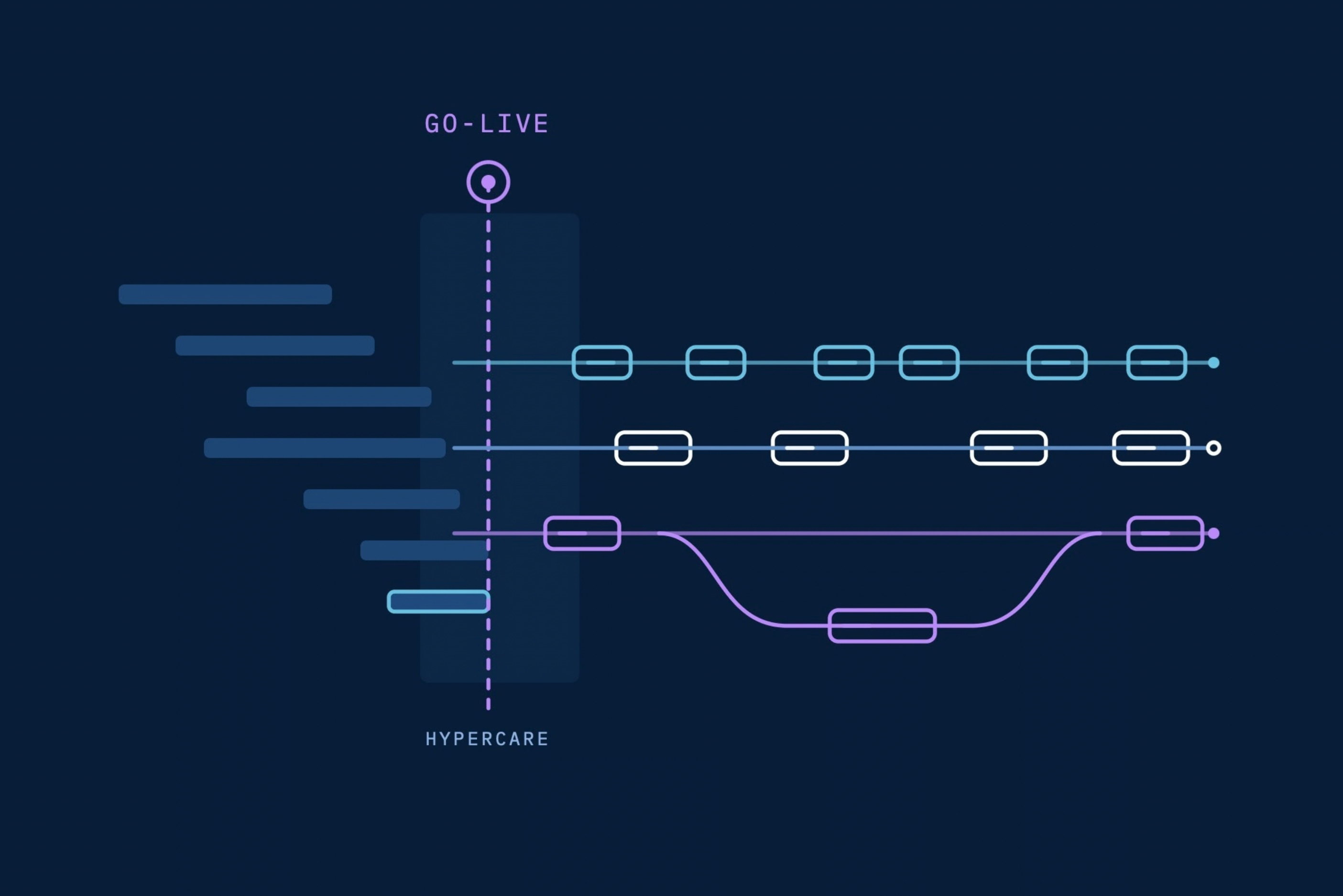
From the Project to Day-to-Day Operations
With the Go-Live of Ivalua, the way we work changes fundamentally. While the project focused on milestones, workshops, and implementing the scope, day-to-day operations are primarily about stability, fast response times, and continuous improvement.
One of the biggest challenges here is transferring project knowledge. Initially, many decisions and contextual details exist only in the minds of the project team.
Here’s a practical example: Even during the hypercare phase, the project and AMS teams can work together on tickets, ensuring that knowledge is integrated directly into the workflow rather than being transferred in a one-time handoff at the end. Clear documentation—such as through tickets and a well-maintained Confluence wiki—also lays the foundation for stable, long-term operations.
For this operation to function properly, clear structures are needed instead of a project-based approach. System errors require a quick response, user accounts follow standardized processes, while workflow changes require planning, testing, and approval. A clear distinction between incidents, service requests, and change requests is therefore essential, as each category has its own processes and priorities.
SLAs should also distinguish between response and resolution times. While response times can be clearly defined, resolution may depend on Ivalua as the manufacturer. For changes, a separate development branch is recommended: bug fixes can be implemented quickly, while larger enhancements require longer testing and approval cycles. This prevents the two processes from blocking each other.
Governance, Capacity and Continuous Improvement
During operations, there are usually more stakeholders involved than during implementation—such as Purchasing, Finance, IT, line-of-business departments, Compliance, and, in some cases, suppliers. Without clear governance, the AMS team can quickly become a mediator between competing requirements. Regular communication between the customer and AMS, along with a transparent prioritization process based on business value, urgency, and effort—rather than on a first-come, first-served basis—creates clarity in this regard.
It is difficult to determine the exact AMS capacity required immediately after Go-Live, as the volume of tickets is often particularly high in the first few months. Robust capacity planning is therefore based on actual operational data and is regularly adjusted, rather than being set once during the project.
A professional AMS goes beyond mere ticket processing. Recurring inquiries and errors highlight areas where processes, training, or system configuration can be improved. Metrics such as ticket volume by category, response times, or the use of individual features reveal such patterns. This transforms reactive support into active application management.
This also includes the ongoing development of the platform: New features and updates from Ivalua are continuously reviewed and evaluated for their specific benefits to the respective customer. Relevant innovations can thus be specifically incorporated into further development—ensuring that the system not only remains technically up-to-date but also continues to evolve in terms of processes.
For the implementation partner, AMS thus represents not only a long-term customer relationship but also the opportunity to work with the customer to implement additional modules, integrations, and optimizations.
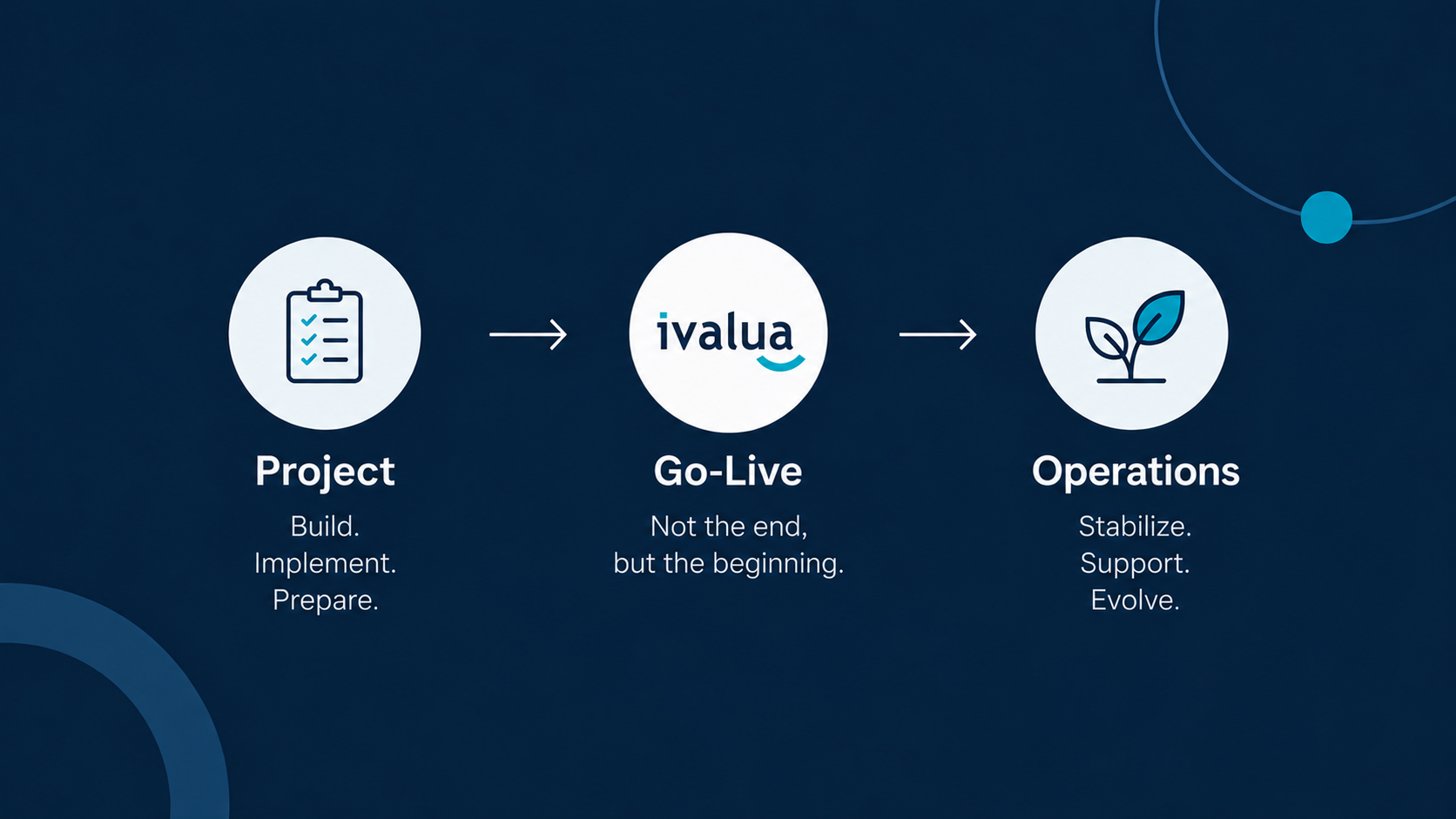
Go-Live, therefore, is not the end of the Ivalua journey, but rather the transition into a new phase. A structured knowledge transfer, clear ticket processes, effective governance, and forward-looking capacity planning form the foundation for this—and at the same time, they provide the basis for continuously learning from user experiences.
Those who incorporate AMS into their planning during the implementation phase not only ensure operational stability but also lay the groundwork for long-term value from Ivalua.